A spectre is haunting Ireland— the spectre of unity. And as the old official powers of partition, North and South, continue their unholy alliance to exorcise the tides of Republicanism, another section of the Southern polity is panicking. Nearly three in four under-35s in the Free State believe their government should immediately begin preparing for the possibility of unity. Internal levels of paddywhackery are at an all-time high: Madra Salach and the Mary Wallopers are selling out venues the length and breadth of the country; young adults everywhere, from the building sites to the Big Four graduate programmes, don buckfast-petrol bomb-t-shirts to the pub. This puts the partitionist soft left of the free state in a tough spot: how to woo the dissident youth when all you ever wanted was to be the managers of a tax haven with a generous welfare regime.
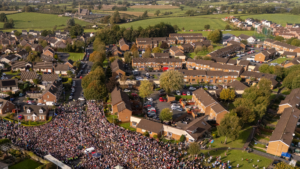
This tension came to a head this week “with everything going on in the North on the Garvaghy Road,” as described by the Social Democrats TD Padraig Rice in an Instagram reel captioned in orange lettering. While Sinn Féin (and their purple-red colleagues up North) spent weeks releasing statements ahead of the Parades Commission decision, sending down activists and party members to stand with the residents as soon as the ruling was made, both Labour and the Social Democrats stayed silent. It was not until mid-afternoon on Sunday that they each released statements, well after the 8 AM call time for confrontation.
The statements themselves give insight into the nature of their position: the decision can be “irresponsible,” “reckless,” “regressive,” and “shocking”; we are told the “pleas of the residents fell on deaf ears.” I am not so sure the ears of the PSNI and Parades Commission are deaf, but rather blocked with the itching desire to return back to the glory days. Contrast these with the language used by the SDLP’s Claire Hanna to describe the decision: the Commission “dropped the ball”, and that “residents have a right to live free from intimidation and confrontation, just as those who wish to parade are entitled to have their applications considered through a fair and credible process.” An advantage afforded to the centre-left south of the border is that they can escape their own ideological commitments to the rule of law. One wonders would they be so brave in their criticism if they, too, could face legal consequences for supporting the residents’ blockade? I certainly believe their statements were timed to give them the option to disavow had things gone in a more hostile direction on Sunday morning. And something tells me that even with as small as the chance the PSNI arrest anyone on the Garvaghy Road is, it is least of all going to be Google’s ex-corporate social responsibility lead from the tree-lined estates of Dublin Rathdown.
I suppose at least the Soc Dems sent Sinéad Gibney up to Portadown, although it’s unclear if it was in her capacity as party spokesperson for tourism, culture, or defence. All Labour could muster up was a meeting in Leinster House last week and a two-slide statement from Ivana Bacik. But there is a notable absence in both of the fuchsia’s comments on the Garvaghy Road situation: talk of republicanism and unity. They tread a thin linguistic line to appeal both to the C.E.A.R.T.A. generation and the middle-aged middle class that thinks Sinn Féin is a criminal gang still run by the Army Council. It is likely the discontent of the latter group that has reigned in Labour, whose leader declared them a “party of Connollyite Republicans” last November. Now, both parties seem content to limit their republicanism to song choices of their youth wings on Instagram. But the spectre’s shadow is growing. Let’s hope it gives them all a big fright at the next election.