Like a lot of people, my first introduction to Mick Lynch came through a woman named Kay Burley. She was presenting for Sky News at the time, and one particular morning, her show featured an interview with the then General Secretary of the National Union of Rail, Maritime and Transport Workers (RMT).
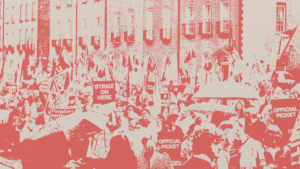
Mick was live-streamed as he led a demonstration of strike action in central London. Burley was doing her very best to drum up the drama (her job), first prodding Lynch on what would happen should a worker cross the RMT picket, and later drawing comparisons to violent clashes during the Miners’ Strike of the mid-1980’s. In response, Mick looked back over his shoulder at the four peaceful, docile demonstrators drinking tea behind him in shot and, perplexed, asked, “Does it look like the Miners’ Strike? What are you talking about?”
This sharp, no-nonsense approach to the British media soon became a staple of Lynch’s public persona; he called politicians liars to their faces on panel shows, he questioned the journalistic integrity of Piers Morgan, and he laughed in the face of Richard Madeley’s “most remarkable twaddle” when he was asked by the then This Morning host if he was a Marxist intent on “bringing down capitalism”.
Lynch spent months calmly highlighting the absurdity of the British media and political class, and it made him one of the most well-known and influential trade union representatives of our time.
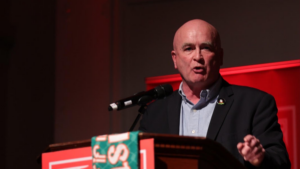
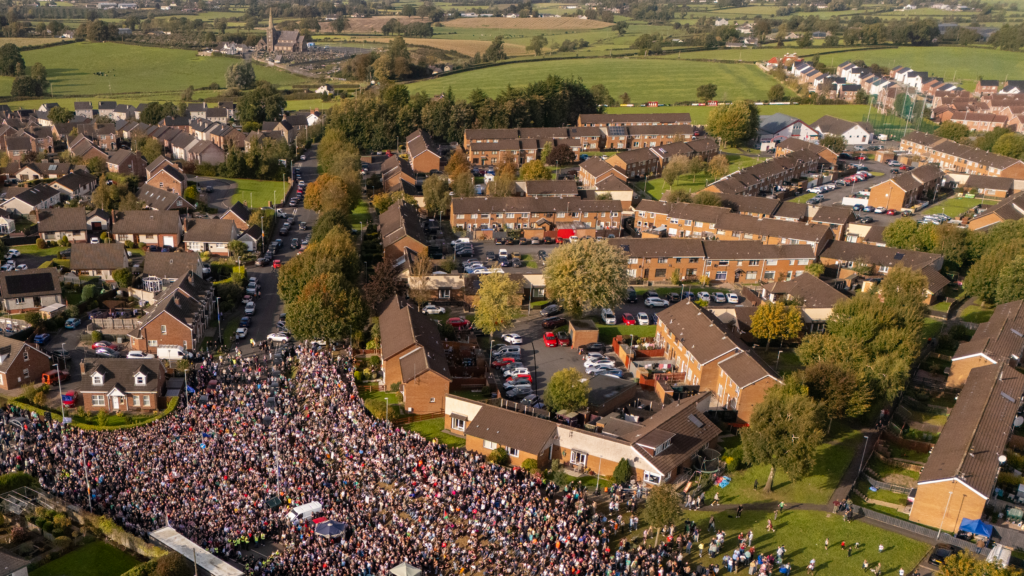
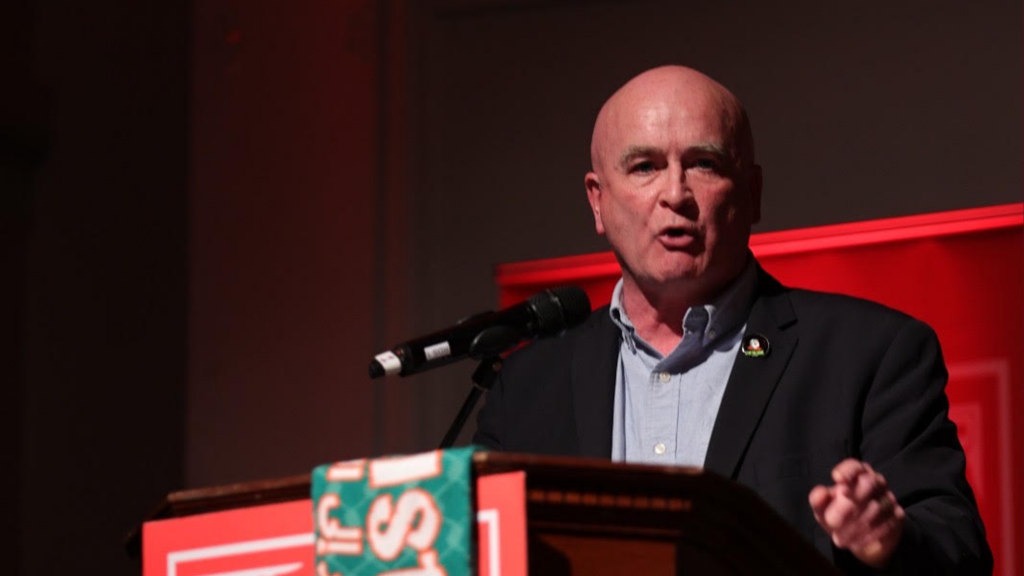
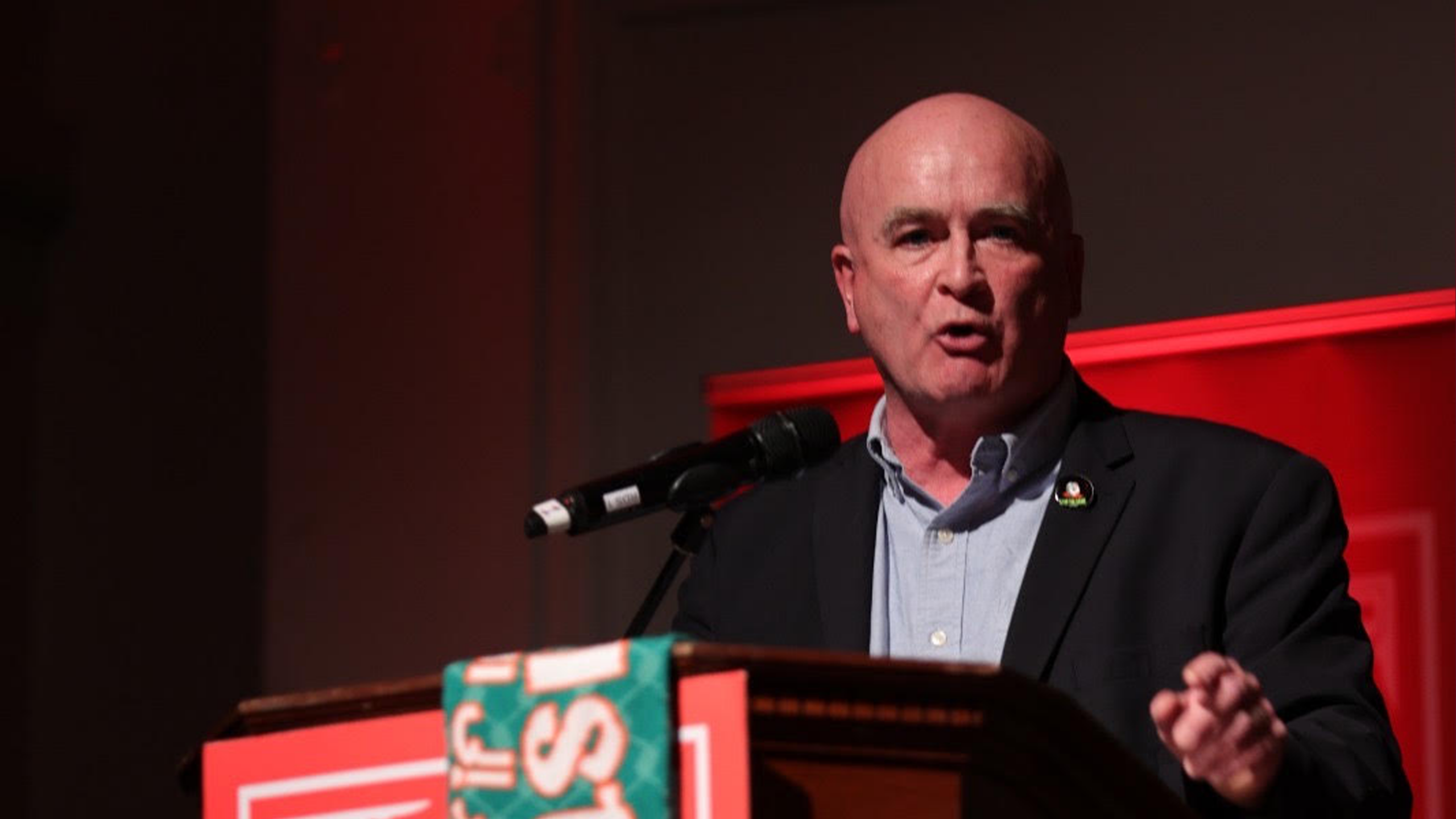
Mick is also a Cork City fan, and a fan of the Republic of Ireland national team. It was both in his capacity as a prominent trade unionist, and as fan of Irish soccer that he addressed a ‘Don’t Play Ball with Genocide’ rally at Dublin’s Liberty Hall.
The rally, organised by SIPTU ahead of Ireland’s UEFA Nations League fixture against Isael on September 27th, featured a plethora of speakers and performers, all calling on the Dáil, the FAI, and the players to cancel the game. It seemed at the time that it would be the players who could provide the only chance of breaking through and seeing the game abandoned. They held all the power, and, in Lynch’s opinion, this was unfair.
Speaking exclusively to The Sunburst at Liberty Hall, he told me, “It’s come down to the players, and that should never have happened. They are people who can think for themselves, but these are young guys who live in a bit of a football bubble, and the FAI and the professional politicians here have said, ‘well, we’re going ahead with this. We’ll put it behind closed doors.’ The FAI should have said, as soon as the draw was made, ‘we’re not playing those fixtures, and we will take the consequences.‘”
It was clear, however, Lynch’s sympathy for the players, does not extend to absolving them of all responsibility. “Soccer players, or any professional athlete, are not used to doing that sort of stuff, being activists or having a moral conscience. I’m sure these guys have got something going on, and they’ve got their families who can tell them, but they’ve also got their agents and their clubs putting pressure on them, so I feel for them in that way. But ultimately, you’ve got to make a choice, have you got a moral position or not? They’ve got a trade union, there’s an Irish PFA and the PFA in England that can back them up in their stance. Somebody’s got to take a lead, the Irish public have done that, and I think the players need to follow that public opinion.”
The following day, the players did make a choice. A planned press conference by the national team was dramatically postponed, and it was later revealed that an internal vote was held among the squad on whether to play the game. They voted that it should go ahead. The players wore black armbands, refused to shake hands with the Israeli squad, and bowed their heads during the opposing team’s national anthem. Gavin Bazunu withdrew from the squad, the only player to do so.
For Lynch, there is a bigger picture. Bigger than the players, and bigger even, than the Ireland v Israel fixtures. “The campaign about boycotting Israel in the sporting realm is going to go on. Whatever happens in the next week or two, will happen, and that campaign is there, but we can’t just let it die after because Israel will be on the sporting scene around the globe, sportswashing their identity. Their team represents that state, and our team, the Ireland team, and hopefully other countries’ teams, have got to say, ‘well, we represent our state, and we can’t abide this mass-murder, the genocide that’s going on in Gaza and the West Bank.’
So, we’ve got to keep the campaign going. People have got to think in their communities, in their trade unions, in their places of worship, in their residents’ associations, how we can take part in this campaign. I hope the Irish labour movement, the trade union movement in particular can lead that.“
Alongside this aspiration for Irish trade unions to head a successful boycott of Israeli sport, Mick also believes the powers of the Dáil must be utilised. “Ultimately, you’ve got to put the politicians under pressure. People like Micheál Martin, and Simon Harris, and all the rest of them have got to feel that there’s a pressure from below, that you can’t just deal with this issue bureaucratically. They’ve got to ultimately conclude that we will not play Israel in any sports. Hopefully the people of Ireland will get behind that.”
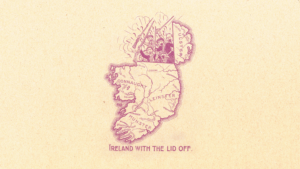
The necessity of this people-led, trade union-supported, basis for change extends, for Lynch, beyond the boycott of Israel, and to internal Irish affairs, including the big question; Following, comments on the matter by Andy Burnham and Donald Trump, and an agreement signed between Sinn Féin and devolved governments in Scotland and Wales, Irish self-determination is in fashion again. Lynch himself wishes to see reunification but is cautious about how it will come about.
“I want a united Ireland. I believe in the Irish Republic, as most people do in principle. It’s a question of how we get there. I think there has to be a prospectus for the Irish people in all thirty-two counties, because it is a big step.
Rather than just repeatedly shouting for the border poll, we, as a movement, whether it’s trade unionists, political parties, or communities, have got to decide what is the new Ireland that we’re going adopt. What is the constitution of this new state that we’re going to offer to all people in the thirty-two counties? I think that’s a debate that should be had.
You’ve got to convince people about the health service, education, pensions, national debt. It is a big issue. I’ve been to some of the debates, I’ve heard pro-economists talking about these things being obtainable and doable, but we can’t allow it just to be people at the top discussing it. There has to be a discussion all around Ireland and in the wider Irish community. There’s obviously a majority in the thirty-two counties for a new state to happen, but we have to start from, what is that state going to be? And how is it going to serve all of the people of the island at the same time?”